One of my teammates has a student in her class this year that falls somewhere on the autism spectrum – location yet to be determined. He is a bright young man with loads of energy and an inquisitive mind. As Thomas Armstrong suggests, in a recent article in Educational Leadership, he is neurally diverse with many strengths. However, his diversity challenges teachers to think differently about ways to capture his interest.
During a recent lesson, I happened to mention something about puzzles. This student impulsively shouted, “Puzzles? I love puzzles! They are my favorite things in the whole world.” Eureka! – an insight into a possible engagement strategy.
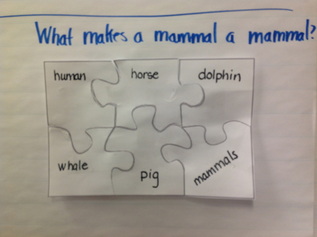
My colleague snatched the ball and ran with it. She and her grade level partners developed an interactive approach that incorporated jigsaw puzzles. A science unit on animals became a puzzle piecing activity for all students, reinforcing the concepts of structures and connections. The targeted student was highly engaged, as were all the other students in the class. The teachers all agree that it was a successful approach that will be used again next year.
Neural diversity brings much to a classroom. Celebrate it this week!
P.S. We have also used an iPad app called JigsawBox that allows you to turn any photo into an interactive jigsaw puzzle. For more app ideas, join me at an IED seminar I will be offering in March on the Best Apps for Differentiating Instruction. Registration will begin in a few weeks for Indianapolis (3/18), Atlanta (3/19), Chicago (3/20 & 3/21) and Denver (3/22.)
During a recent lesson, I happened to mention something about puzzles. This student impulsively shouted, “Puzzles? I love puzzles! They are my favorite things in the whole world.” Eureka! – an insight into a possible engagement strategy.
My colleague snatched the ball and ran with it. She and her grade level partners developed an interactive approach that incorporated jigsaw puzzles. A science unit on animals became a puzzle piecing activity for all students, reinforcing the concepts of structures and connections. The targeted student was highly engaged, as were all the other students in the class. The teachers all agree that it was a successful approach that will be used again next year.
Neural diversity brings much to a classroom. Celebrate it this week!
P.S. We have also used an iPad app called JigsawBox that allows you to turn any photo into an interactive jigsaw puzzle. For more app ideas, join me at an IED seminar I will be offering in March on the Best Apps for Differentiating Instruction. Registration will begin in a few weeks for Indianapolis (3/18), Atlanta (3/19), Chicago (3/20 & 3/21) and Denver (3/22.)
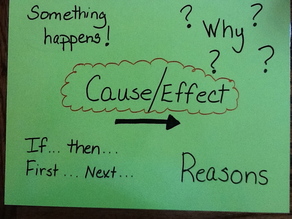
During a unit on informational texts, I took photos of papers that showed the features of different types. We then turned them into puzzles using the Jigsaw Box app.
 RSS Feed