Picture
Many teachers use the Frayer Model (1969) as a vocabulary application activity. The Frayer Model typically involves asking students to fold or divide their paper into four sections. In one quadrant the students write the word and definition, in another they write facts/characteristics, in another quadrant examples, and finally non-examples.

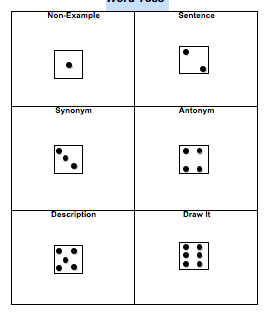
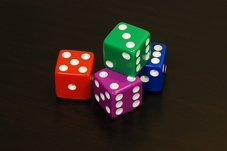
To mix things up a bit, last week I asked a co-teacher to replace her use of the Frayer Model in algebra with a Word Toss activity. We placed students into pairs and provided each pair with a die and a Word Toss worksheet. (See below. I'd be happy to email the worksheet to you!) Students were directed to role the dice and perform the task associated with the number on the face of their die.

The change in routine increased alertness by adding some novelty and tactile interaction to the lesson. Afterward, my co-teacher and I brainstormed alternative tasks that could go on the Word Toss worksheet:


  • Act it out
  • Develop a metaphor
  • Develop an analogy
  • Create a multiple choice question
  • Perform word surgery (dissect into root, prefix, suffix)
  • Transform it (add prefix or suffix)
  • Career Track it (think of a job for which you would need this word)
  • Create a crossword clue
 
 
This is your new blog post. Click here and start typing, or drag in elements from the top bar.
Picture

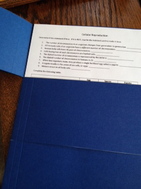
In the past I have posted about Work Masks - file folders that are cut to cover portions of student worksheets. This photo is of one I used this week in a high school science class. The worksheet had 3 different sections for students to complete. By using the work masks, we were able to reduce the amount of visual distraction, reduce the anxiety some students might feel about the quantity of work, and keep the class moving through the worksheet together, rather than working ahead. 


Picture
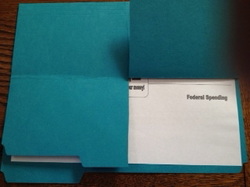
While these masks are extremely effective for a portrait page orientation, they don't work for every worksheet. So I was very excited when Mike Shaner, a teacher at Smyrna High School, developed an idea for how to use masks for a Frayer Model worksheet. He cut the file folder down the center and then folded each section in half, exposing just one fourth of the page at a time. We had students fill in one quadrant at a time, while the other three were covered. Students then flipped the worksheet around to work on the other two boxes. Thanks, Mike!


Picture
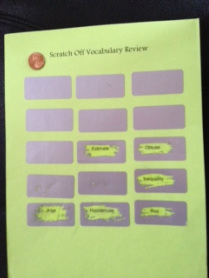
Everyone in my household found a scratch-off lottery ticket in their stocking this year. We each experienced a few moments of hope and excitement as we carefully chose the spots to scratch. You can add that same fun* to your classroom instruction with scratch-off stickers. These are available from several websites and are fairly inexpensive. Just print out a list of review items – events, dates, vocabulary- and place a sticker over each item. You can also simulate the experience even less expensively by laminating your review list and dabbing a bit of poster paint over each item. When the paint dries it can be scratched off with a coin, revealing the item underneath.


Originally published in January, 2012. Today we used this strategy in a middle school science class. Each student made a prediction about the outcome of an experiment, then covered over their prediction with a scratch-off sticker. After the experiment, students swapped with a peer and scratched off to see if the predictions were correct. 

This is your new blog post. Click here and start typing, or drag in elements from the top bar.