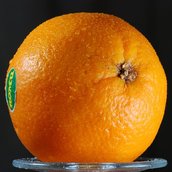
Today I had the wonderful opportunity to co-teach English with Mary. Students are in the middle of reading Shakespeare’s Julius Caesar. To start class with a novel hook, I showed them an orange and asked them to predict what an orange might have to do with the play. We were greeted by some puzzled expressions at first, but then students began to buzz with each other about possibilities. I tossed the orange around the room and we listened to their ideas.
“If you stab an orange, juice will spurt out, like when they stabbed Caesar and he bled out.”
“You can peel back the skin of the orange, kind of like they were trying to peel back the layers of power in Rome.”
“In The Godfather, an orange always meant someone was going to die. In JC there are predictions of someone dying.”
“If you go deeper than the skin you see something different. This is like the characters, one thing on the surface, but different deep down.”
Neuroscientist Judy Willis (yes, I am a fan!) tells us that novelty grabs attention and helps information to get past the RAS (Reticular Activating System.) Once information makes it past the RAS, the brain begins to make predictions. We can direct this impulse to support our content objectives! Students were engaged and thinking in creative, connected ways. So grab a food item from your kitchen or pantry and give it a try!
“If you stab an orange, juice will spurt out, like when they stabbed Caesar and he bled out.”
“You can peel back the skin of the orange, kind of like they were trying to peel back the layers of power in Rome.”
“In The Godfather, an orange always meant someone was going to die. In JC there are predictions of someone dying.”
“If you go deeper than the skin you see something different. This is like the characters, one thing on the surface, but different deep down.”
Neuroscientist Judy Willis (yes, I am a fan!) tells us that novelty grabs attention and helps information to get past the RAS (Reticular Activating System.) Once information makes it past the RAS, the brain begins to make predictions. We can direct this impulse to support our content objectives! Students were engaged and thinking in creative, connected ways. So grab a food item from your kitchen or pantry and give it a try!
 RSS Feed
