Activating prior knowledge is a common educational phrase. Almost any teacher will tell you the importance of getting students to make connections to their background knowledge before they learn about a new topic or read a new story.
Recently I searched for ideas on how to activate prior knowledge. Everything I found included the teacher doing the activating of the students - an external event, rather than students learning how to activate their own brains. We need our students to be able to do this independently! During standardized assessments, teachers are not able to prompt students with questions, KWL charts, and other hints about the topic. During most authentic learning situations, I don't have someone saying to me "What do you Know about this topic?"
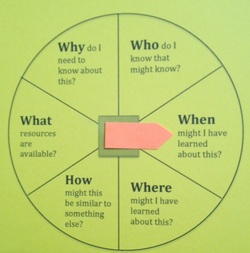
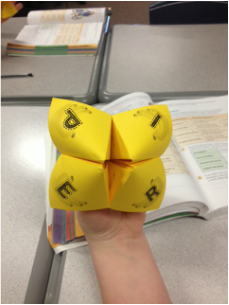
So how does one activate one's own knowledge? What do you do when faced with a topic you know little about? I reflected on my own experience and then developed a tool to help my students. The Prior Knowledge Spinner provides 6 questions to stimulate metacognition, particularly as it relates to prior knowledge. I provided students with the topic, then had them spin and answer the questions.
Recently I searched for ideas on how to activate prior knowledge. Everything I found included the teacher doing the activating of the students - an external event, rather than students learning how to activate their own brains. We need our students to be able to do this independently! During standardized assessments, teachers are not able to prompt students with questions, KWL charts, and other hints about the topic. During most authentic learning situations, I don't have someone saying to me "What do you Know about this topic?"
So how does one activate one's own knowledge? What do you do when faced with a topic you know little about? I reflected on my own experience and then developed a tool to help my students. The Prior Knowledge Spinner provides 6 questions to stimulate metacognition, particularly as it relates to prior knowledge. I provided students with the topic, then had them spin and answer the questions.
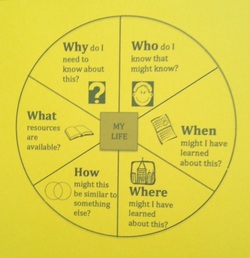
I also created a second version with visual prompts to help our English Learners or other students who needed some additional support.
Our goal is to have students use the spinners frequently enough that the questions become embedded in their metacognitive processes. This will include a transition phase when we fade out the actual spinners and encourage a visualization.
Interested in these tools? Email me a request at anne@ideasforeducators.com and I will be happy to send them to you.
Our goal is to have students use the spinners frequently enough that the questions become embedded in their metacognitive processes. This will include a transition phase when we fade out the actual spinners and encourage a visualization.
Interested in these tools? Email me a request at anne@ideasforeducators.com and I will be happy to send them to you.


 RSS Feed
