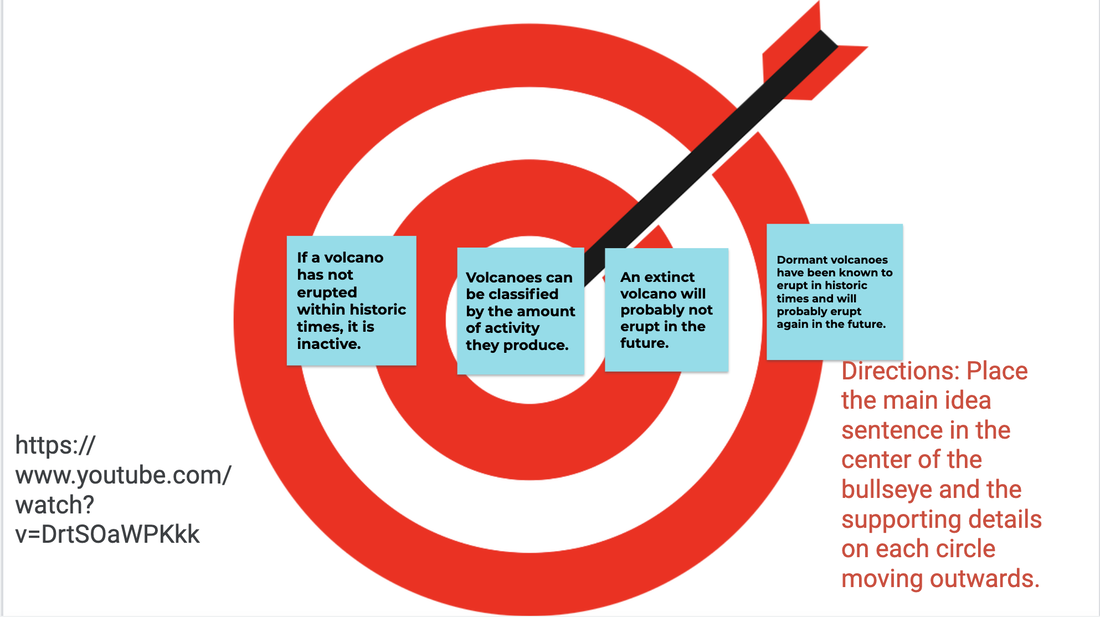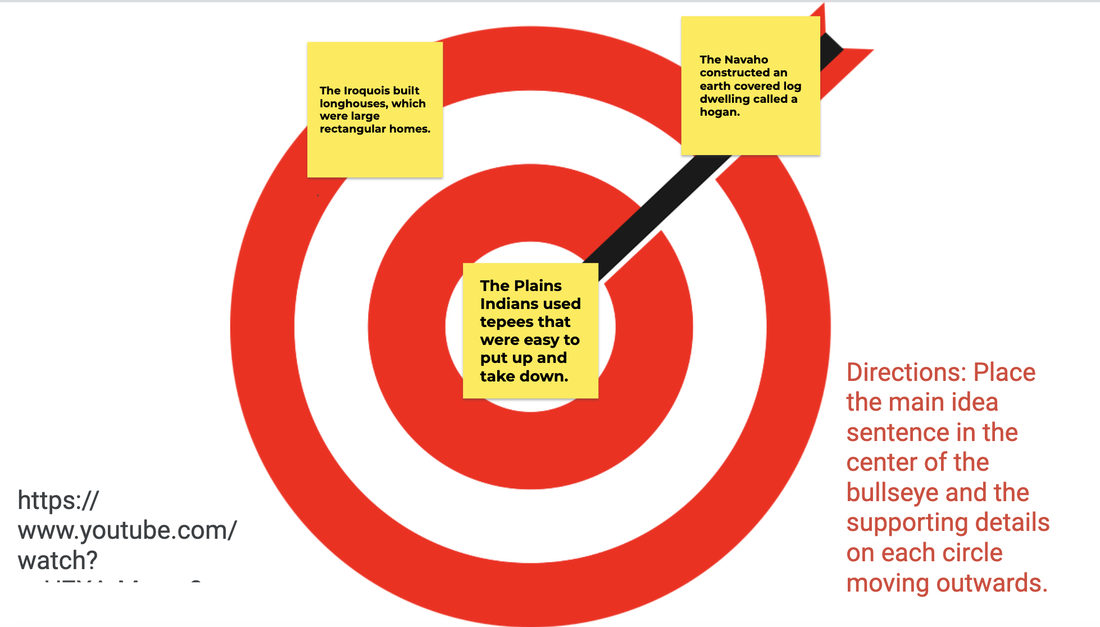
Thanks to a post by Larry Ferlazzo, I spent some time this morning checking out a new website, currently in beta, called Newsela. It looks very promising! Newsela posts current news articles, rewritten at 4 lexile levels, to address the reading needs of mixed ability classrooms. A teacher can register her class and assign an article for them to read on line. Students choose which Lexile level to read (starting at about 4th grade through senior high school) and then answer four questions at the end of the reading. The questions are also leveled, which will make it possible for struggling readers to participate. However, most teachers will want to develop their own, more thought provoking questions for class discussion. If my intention was to design this as an online only activity, I would probably pair Newsela with my own questions on Polleverywhere, Socrative, TodaysMeet, Edmodo or another discussion forum. Newsela is free at the moment - so register while you can. It might stay that way for early testers Add Comment Recently I was invited to write for Expert Beacon - a site dedicated to sharing expert advice on a wide range of topics. Here is my first article on the Do's and Don'ts of successful inclusive practices. Athletic teams and charitable groups have used wrist bands for several years as a way to promote their organizations and goals. Frequently, students can be seen with several different colored bands dangling around their wrists. Here's an idea for tapping into this interest to promote your learning goals, especially with rote information such as spelling words and math facts. (Great for primary grade students!) Obtain two different colors of Velcro ( the non-adhesive type.) From one color, cut strips approximately 7 inches in length. On the other color, use a permanent marker to write numbers and operational signs (or letters for spelling.) The written material will attach to the wrist band strips, so be sure to use the opposite Velcro structures so that they will stick together. Fnally, cut a one inch piece to serve as a clasp or connecting device to hold the band together. At the start of the day direct your students to create a band that shows one of the math facts that they have not yet mastered (or to spell their name, or phone number, or missed spelling word.) As they wear the learning bands throughout the day they will see a frequent reminder of the key fact they need to learn! Over the summer months the laminating machines in many schools will be regularly rolling as teachers pop in to prepare materials for the start of the school year. When trimming your laminated items, remember to save the excess – it makes a wonderful tactile tool I call Laminate Layers. Staple together as many strips as you need and have students graphically portray concepts that have a layered effect. Here are two ideas from some high school teachers attending one of my recent workshops on differentiation. I am fortunate enough to be invited to co-teach in classrooms all over the country. When these opportunities arise, I ask the classroom teacher to email me the lesson plan and any accompanying materials a few days in advance so that I can look at them. My goal is to analyze the materials from the perspective of a special educator, thinking about what adaptations or differentiation I can add to support struggling students. Often, these classroom materials include a graphic organizer (GO) of some kind. Recently I reviewed several different “graphic organizers” and was struck by the breadth of what that term seems to mean to teachers. Some of the GOs were very detailed, while others were minimalistic. Reflecting, I wondered if educators need a rubric of some kind for what an effective GO looks like. (A web search led to several rubrics to use after a student has designed and completed a GO, but none for teachers to use in designing or choosing a GO to provide students. If you know of one, please share.) Here is my first attempt at the criteria to include in a GO Rubric. Please let me know what you think! · The format allows for relationships or patterns to be clearly seen · Illustrations/graphics support the learning objective · Prompts are provided in a simple but clear manner · Scaffolding (as necessary) provides access to the concepts · Once complete, the graphic organizer can be interpreted in a meaningful way The GO on the left was provided to me, designed for a lesson on the Civil War, in which the primary objective was for students to be able to identify multiple perspectives on a topic, especially that of the African American soldiers. The GO on the right shows my redesign, based on the above rubric, including supports for struggling students. It is generic enough to be used for any discussion of multiple perspectives. Feel free to download it here. Yesterday, I had the pleasure of meeting Heather Newman, a high school Spanish teacher in Delaware. Heather participated in a workshop I facilitated on co-teaching and differentiated instruction. One of our conversations concerned the need to add tactile and kinesthetic instruction to our lessons, no matter how old our students are. Heather showed this photo to me and explained how she had her Spanish 1 students match vocabulary to pictures using yarn. What a creative idea! She reported that her students loved it, commenting that it was so much better than another worksheet. Thanks for sharing, Heather! Memory researchers tell us that in order for learners to move information from short term to long term memory, they must recode the information into their own words. Today, after teaching new math terms, we asked students to develop definitions in their own words. Students then worked together in small groups to share definitions and choose one that they felt was the best. I then introduced students to an iPad app called MailVU or video mail (FREE). This app is a very simple, intuitive way to take a brief video and email it to someone. We used the app to video students reading the chosen definitions, and then emailed them to the school principal. Students loved chanting,"You just got sent to the principal's office!" This app has some great features - the sender can choose to be notified when the email has been read, and can choose to have the video self-destruct after a chosen number of viewings. Students especially liked the self-destruct feature. Here are some other great ideas for using this app in your classroom:
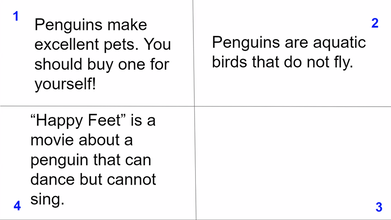
T-Charts are a common graphic organizer to assist students in thinking about the differences between two things that are related in some way. At times they are used to show examples and non-examples of one thing. Visually, they typically look like an capital or lowercase t. For students who struggle with language, whether because they are learning English or a student with a disability, T-charts can be enhanced by using pictures in addition to the traditional words. Here is a photo of a student-generated T-chart to show the differences between narrative writing and expository essay writing. Students worked with a partner. Each pair was given a paper with either a word or a picture. Pairs came up and placed the paper in the correct column and justified their decision. Research is clear that non-linguistic representations are very powerful. The next time you are using a graphic organizer, whether on chart paper or the computer, consider adding simple drawings, printed pictures, or photos. Thanks to Elena Aguilar, we have another solid, research-based call for professional development that ties traditional workshop learning with job-embedded coaching. Aguilar’s new book, “The Art of Coaching: Effective Strategies for School Transformation,” begins with a synopsis of the coaching research, best summed up as: “Coaching allows teachers to apply their learning more deeply, frequently and consistently.” and: “Schools with coaching programs saw significant improvement in measures of teacher practices and student outcomes compared to schools without coaching programs.” My own experience reinforces this truth. Teachers who attend my workshops walk away excited. Teachers who receive job-embedded coaching remain excited over the long term, transfer their learning to their teaching, and develop the skills to reflect and improve on their learning, even after my coaching has ended. Aguilar also cites research on school climate: “effective embedded professional learning promotes positive cultural change.” When leadership teams embrace and support coaching as a key strategy for improving teaching and learning, teachers will value professional collaboration. Aguilar’s book has much more to offer – chapters on models of coaching, elements of effective coaching, steps in the process and tips for success. Check it out at http://www.wiley.com/WileyCDA/WileyTitle/productCd-1118421027.html |


RSS Feed